Before October 2023 A table that was full
Each row in the chart on the right represents a food group — bread, vegetables, dairy, protein, and more. Each cell represents one day of the week: seven full cells means that food group was consumed every day. The data is based on periodic WFP surveys that contact many different families each month. Before October 7, an average family in Gaza ate nearly all food groups every week: fresh bread, vegetables, dairy products, pulses — and at least once or twice a week, animal protein as well. The numerical score at the top shows overall dietary diversity — how nutritious Gaza's diet was relative to recommended levels.
Before October 7, the Khalil family from Gaza City ate all food groups every week. Fatima cooked lentil soup, roasted fresh vegetables from the market, and served fresh bread with olive oil — consumed nearly every day. The children drank milk in the evening. On Fridays, the family ate a chicken dish. It was not abundance, but it was a varied and complete menu composed of eight food groups.
September 2024 Aid arrives, cooking fades
One year into the war, the Khalil family has been displaced to Rafah and then to the Mawasi, where they receive partial aid. Pulses consumption rises above pre-war levels due to WFP distributions, but oil — a cornerstone of Palestinian cooking — has dropped to half of pre-war consumption. Fresh dairy products have nearly disappeared. The family hasn't seen fresh milk in weeks. Cooking gas is so scarce that many meals are eaten uncooked. The way people eat is changing.
Average across 5 governorates. Source: WFP Market Monitor, November 2024.
November 2024 The floor gives way
November marks the deepest collapse to date. Protein consumption drops to nearly zero. Dairy consumption crashes to roughly once every ten days. Sugar has almost entirely disappeared. Oil, once a daily staple, is consumed less than twice a week. In the second year of the war, the Khalil family's menu has lost nearly all diversity. Only cereals and pulses remain.
Average across 4 governorates (Rafah was not surveyed in Nov. 2024). Source: WFP-0000163207.
December 2024 Small signals, same crisis
December shows small fluctuations — a new wave of aid reaches certain areas. In the central governorates, dairy consumption rises slightly as powdered milk arrives. There is a small uptick in vegetable consumption. But these are background noise against a catastrophic baseline. Oil remains below half its pre-war level. No protein. No fresh food. Three-year-old Layla does not remember what an apple looks like. Every small addition feels significant only against the empty plate.
Average across 5 governorates. Source: WFP-0000164123 (FSA January 2025, corrected December 2024 data).
January 2025 The ceasefire arrives
On January 19, 2025, the ceasefire takes effect. Aid convoys stream into the Strip. Within days, the data shifts: dairy climbs from near-zero to once every five days. Vegetable and fruit consumption returns, albeit in very limited amounts. Oil approaches two days per week. For the first time since August, the Khalil family receives powdered milk. This is hope — fragile, partial, and very welcome.
Reflects the ceasefire that began on January 19, 2025. Average across 5 governorates. Source: WFP-0000164964.
February 2025 The best month since the war began
February 2025 shows the highest figures since the war began. Dairy consumption jumps to once every two days — families report fresh milk and powdered milk through both aid distribution and on the market. Vegetable consumption reaches twice a week. Oil returns to nearly four days per week, approaching pre-war consumption levels. Sugar recovers to near its previous levels. One day, father Walid takes the children to the market in Gaza City. If you ignore the terrible destruction around for a moment, you can briefly forget the horrors of war.
Ceasefire fully in effect. Average across 5 governorates. Source: WFP-0000164964. Oil and sugar data were not reported in subsequent FSA rounds.
April 2025 Bread and beans
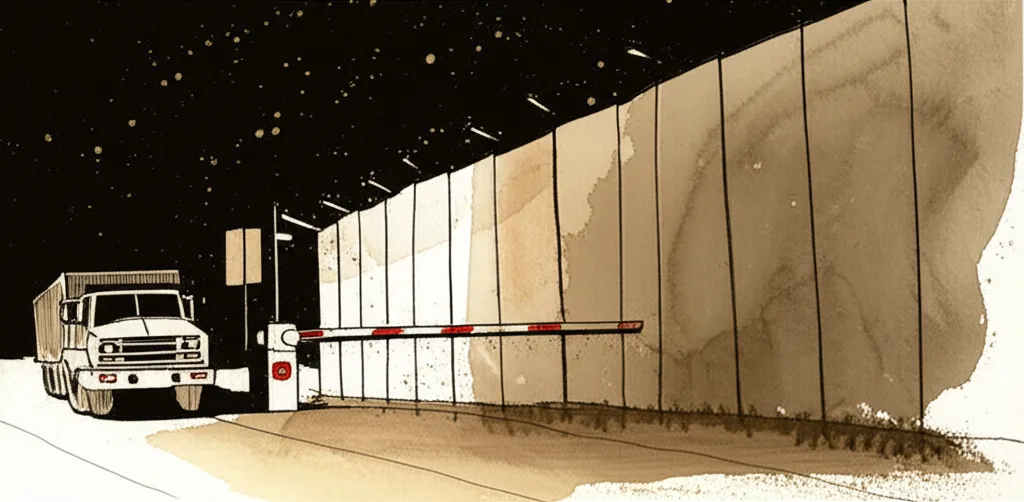
The ceasefire ended in March. Food in the Strip is dwindling, but there is still enough to eat cereals and pulses. Dairy consumption falls back to one day per week. Protein — fish or meat — disappears again: zero. The family survives on flour rations and canned beans, which require standing in long lines that sometimes end in nothing. The temporary recovery in February already feels like a distant dream.
May 2025 The blockade continues
The blockade continues into May. Dairy products disappear again. Seven-year-old Ahmed gives up and hands his little sister the last cup of milk made from the expired powder that Walid managed to buy. Vegetable consumption plummets to half a day per week. Fruits vanish from the menu. Even cereal supplies themselves begin to crumble as flour shipments are halted, dropping to six days per week. Protein remains at zero. For the Khalil family, hunger becomes a daily condition.
June 2025 The absolute nadir
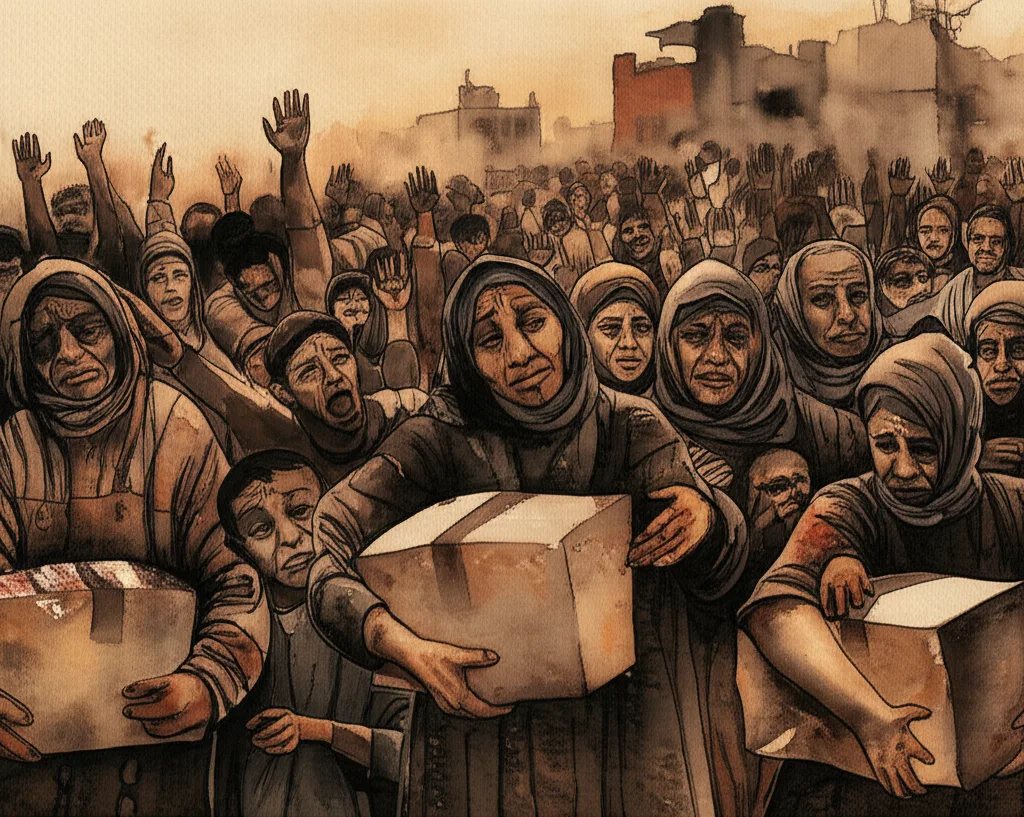
The GHF compounds begin operating, but the nutrition they provide reaches only those capable of walking kilometers in the dark and then competing for food boxes against thousands of other starving people. Dietary diversity hits its lowest point. Cereals drop to four days — families eat them only once every two days. The weekly menu consists of bread when available, lentils when not. Four out of six core food groups have effectively ceased to exist. Little Layla is found to be suffering from malnutrition and receives regular treatment at the nearest medical tent. This is famine.
August 2025 Surviving, barely
The third month of GHF operations, supplemented by independent humanitarian aid that is permitted to enter the Strip — in limited quantities. Cereal consumption recovers slightly to nearly five days per week, but everything else remains near zero. Dairy — once every ten days at best. Protein — 0.1, virtually nonexistent. WFP data indicates that 95% of households go to sleep hungry. The Khalil family eats one to one and a half meals per day. Their eldest son Lutouf, fourteen years old, has not eaten protein in weeks. The IPC classifies their governorate as Phase 5: Catastrophe.
October 2025 First real improvement
Aid supply increases across all governorates. Dairy consumption reaches nearly three days per week — the highest since the January ceasefire. Vegetables and fruits return to half a day per week. Protein appears — barely, but it appears. For the Khalil family, this means eggs perhaps once or twice a month and a handful of greens in the soup. Oil rises to nearly four days. Layla has recovered somewhat and gone back to playing outside the tent.
November 2025 Slow recovery
Vegetables climb to a day and a half per week — triple the August level. Dairy — nearly three days. Protein stabilizes at half a day. The numbers remain a fraction of pre-war levels, but they are heading in the right direction. Oil returns to four days and more. The family goes through days without protein, but not weeks. The children's weight begins to stabilize.
January 2026 The best month
January shows the strongest recovery to date. Dairy — three days per week. Vegetables — more than two days. Protein — more than one day per week, for the first time in months. Oil — five and a half days. And yet even now — the best month in the past two years — dietary diversity is only about two-thirds of pre-war levels. The path ahead is still long.
February 2026 Stable, but lacking
The numbers stabilize. Cereals every day, dairy nearly three times per week, vegetables twice. Oil — more than five days. But fruit — only half a day per week, protein — a day and a quarter. Before the war, both appeared nearly every day. A full rehabilitation of Gaza's food system will take years — assuming the ceasefire holds. It has not always held in the past.